
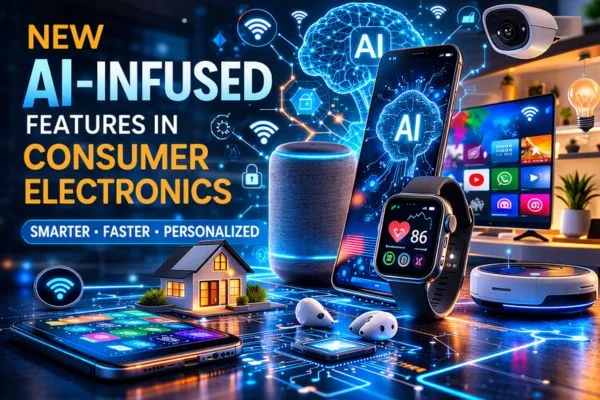
Artificial intelligence is no longer limited to research labs or enterprise software. Today, it is deeply integrated into everyday devices, from smartphones and smart TVs to home appliances and wearable gadgets. These innovations are shaping the future of technology by making devices smarter, faster, and more personalized.
One of the most exciting developments in modern technology is the rise of AI infused consumer electronics. Manufacturers are embedding intelligent algorithms and machine learning capabilities directly into devices to improve performance, automation, and user experience. These advancements allow electronics to understand user behavior, optimize power usage, enhance security, and automate complex tasks.
As technology evolves, AI infused consumer electronics are becoming central to modern lifestyles. This article explores the newest AI-powered features, how they work, and why they are revolutionizing everyday gadgets.
What Are AI-Infused Consumer Electronics?
Before exploring the latest innovations, it is important to understand what AI infused consumer electronics actually mean.
These are electronic devices that incorporate artificial intelligence technologies such as machine learning, computer vision, natural language processing, and predictive analytics. Instead of simply responding to commands, these devices can analyze data, learn from patterns, and make intelligent decisions.
For example:
-
Smartphones that optimize battery life based on user habits
-
Smart home devices that automatically adjust lighting and temperature
-
AI-powered cameras that enhance photos in real time
-
Wearables that monitor health and predict potential issues
The goal of AI infused consumer electronics is to create technology that adapts to users rather than forcing users to adapt to technology.
Why AI Is Transforming Consumer Electronics
Several technological advancements are accelerating the growth of AI infused consumer electronics.
1. Faster Processors
Modern processors include dedicated AI engines capable of processing complex machine learning models on devices.
2. Edge AI Technology
Instead of sending data to cloud servers, AI can now run directly on devices, improving speed and privacy.
3. Large Data Availability
Consumer devices generate massive data from sensors, cameras, and user interactions. AI uses this data to improve performance and personalization.
4. Smart Ecosystems
Connected ecosystems allow multiple devices to work together, enabling smarter automation across homes and workplaces.
These developments have made AI infused consumer electronics more powerful, efficient, and accessible to everyday users.
AI Features in Smartphones
Smartphones are leading the revolution in AI infused consumer electronics. Almost every modern smartphone now includes AI capabilities to improve performance, photography, and user experience.
AI Camera Technology
AI-powered cameras automatically detect scenes and optimize settings such as exposure, color balance, and contrast.
Key AI camera features include:
-
Scene recognition
-
Night mode enhancement
-
Portrait background separation
-
AI image stabilization
These improvements allow users to capture professional-quality photos without advanced photography skills.
Intelligent Battery Management
AI analyzes user behavior to optimize battery usage. For example, apps used frequently receive priority while background apps consume less power.
Smart Voice Assistants
Voice assistants powered by artificial intelligence help users perform tasks such as sending messages, searching the web, and controlling smart devices.
These innovations demonstrate how AI infused consumer electronics are transforming smartphones into intelligent personal assistants.
AI in Smart Home Devices
Smart homes represent one of the fastest-growing segments of AI infused consumer electronics. AI enables home devices to automate everyday tasks and create personalized living environments.
Smart Lighting Systems
AI-enabled lighting systems adjust brightness and color temperature based on time of day, mood, and user preferences.
Intelligent Security Systems
AI-powered security cameras can detect unusual activity, recognize faces, and send real-time alerts to homeowners.
Voice-Controlled Automation
Smart home ecosystems allow users to control appliances using voice commands. AI systems can also learn daily routines and automate tasks automatically.
For instance, lights may turn on when someone enters a room, or the thermostat may adjust temperature based on weather conditions.
These capabilities highlight how AI infused consumer electronics are making homes safer and more efficient.
AI-Powered Smart TVs
Televisions have evolved significantly with the integration of artificial intelligence. Modern TVs use AI to enhance viewing experiences and content discovery.
AI Picture Enhancement
AI algorithms analyze video content in real time to improve resolution, brightness, and color accuracy.
Personalized Content Recommendations
Streaming platforms use AI to recommend movies and shows based on viewing history.
Voice and Gesture Control
Some smart TVs now support voice commands and gesture recognition, allowing users to control the device without a remote.
These innovations illustrate how AI infused consumer electronics are transforming entertainment experiences.
AI Wearables and Health Monitoring
Wearable devices are becoming more advanced thanks to artificial intelligence. Smartwatches and fitness trackers now include AI-driven health monitoring capabilities.
Real-Time Health Tracking
AI-powered wearables monitor metrics such as:
-
Heart rate
-
Blood oxygen levels
-
Sleep patterns
-
Physical activity
Predictive Health Insights
AI can analyze health data and provide recommendations for improving lifestyle habits.
Fitness Coaching
Some wearables include AI-powered fitness coaching that adapts workouts based on performance and recovery levels.
These advancements show how AI infused consumer electronics are contributing to better health and wellness.
AI in Smart Appliances
Home appliances are becoming more intelligent with AI integration. Refrigerators, washing machines, and air conditioners now use AI to improve efficiency and convenience.
Smart Refrigerators
AI-enabled refrigerators can track food inventory and suggest recipes based on available ingredients.
Intelligent Washing Machines
AI washing machines analyze fabric types and load sizes to select optimal wash cycles.
Energy Optimization
AI systems optimize energy usage by adjusting appliance performance based on demand.
These features demonstrate how AI infused consumer electronics are simplifying everyday household tasks.
Generative AI in Consumer Devices
Generative AI is emerging as a major innovation in modern electronics. This technology can create content such as text, images, and music directly on devices.
Examples include:
-
AI photo editing tools in smartphones
-
AI writing assistants on tablets and laptops
-
AI-generated wallpapers and themes
With generative AI, AI infused consumer electronics are becoming creative tools that help users produce content more efficiently.
Edge AI: Faster and More Private Technology
One important trend shaping AI infused consumer electronics is the adoption of edge AI technology.
Edge AI processes data directly on devices instead of sending it to cloud servers.
Benefits include:
-
Faster performance
-
Reduced internet dependency
-
Improved data privacy
-
Lower latency
For example, facial recognition on smartphones works instantly because the AI model runs locally on the device.
Edge AI will continue to play a critical role in the evolution of AI infused consumer electronics.
Challenges of AI in Consumer Electronics
Although the benefits are significant, AI infused consumer electronics also present certain challenges.
Privacy Concerns
AI devices often collect large amounts of personal data. Companies must ensure strong security and transparent data policies.
High Development Costs
Developing AI hardware and software requires significant investment.
Power Consumption
Advanced AI processing can increase energy usage if not optimized properly.
Manufacturers are actively addressing these challenges through improved security protocols and energy-efficient AI chips.
The Future of AI-Infused Consumer Electronics
The future of AI infused consumer electronics looks extremely promising. Emerging technologies will make devices even smarter and more connected.
Some expected developments include:
Hyper-Personalized Devices
AI will understand individual preferences and adapt devices automatically.
Fully Automated Smart Homes
Homes may operate almost entirely through AI-driven automation.
AI-Powered Augmented Reality
AR glasses with AI capabilities could transform how users interact with digital information.
Advanced Health Monitoring
Future wearables may detect diseases early using AI-based health analysis.
These innovations will further expand the capabilities of AI infused consumer electronics in everyday life.
Conclusion
Artificial intelligence is reshaping the consumer electronics industry. From smartphones and smart TVs to home appliances and wearable technology, AI is making devices more intelligent and user-friendly.
The growth of AI infused consumer electronics is transforming how people interact with technology. Devices are no longer passive tools; they are becoming smart assistants capable of learning, adapting, and improving daily life.
As AI technology continues to evolve, consumers can expect even more powerful features, smarter automation, and highly personalized experiences. The integration of artificial intelligence will remain a key driver of innovation in the consumer electronics industry.
In the coming years, AI infused consumer electronics will become an essential part of everyday living, shaping the future of digital lifestyles around the world.
FAQs
1. What are AI infused consumer electronics?
AI infused consumer electronics are everyday electronic devices that use artificial intelligence to improve functionality and user experience. These devices can analyze data, learn user behavior, and automatically optimize performance. Examples include AI-powered smartphones, smart TVs, wearable devices, and smart home appliances.
2. How does artificial intelligence improve consumer electronics?
Artificial intelligence improves consumer electronics by enabling devices to automate tasks, learn from user habits, and provide personalized experiences. AI can enhance camera quality, optimize battery usage, recommend content, and improve device security.
3. What are examples of AI infused consumer electronics?
Common examples include smartphones with AI cameras, smart speakers with voice assistants, AI-powered smart TVs, wearable fitness trackers, and smart home devices such as thermostats and security cameras.
4. Why are AI infused consumer electronics becoming popular?
These devices are becoming popular because they make technology more convenient and efficient. AI allows gadgets to adapt to users, automate everyday tasks, and provide smarter features that improve productivity and comfort.
5. What role does AI play in smartphones?
In smartphones, AI helps improve photography, voice recognition, battery management, and system performance. AI also powers virtual assistants that allow users to control devices and perform tasks using voice commands.
6. Are AI powered consumer devices safe to use?
Most AI-powered consumer devices include built-in security features such as data encryption and biometric authentication. However, users should ensure they update their devices regularly and review privacy settings to protect personal data.
7. How do AI powered smart home devices work?
AI-powered smart home devices use sensors and machine learning algorithms to monitor user behavior and environmental conditions. They can automatically adjust lighting, temperature, and security settings based on daily routines.
8. What is edge AI in consumer electronics?
Edge AI refers to artificial intelligence processing that occurs directly on a device instead of relying on cloud servers. This approach improves speed, reduces latency, and enhances privacy because sensitive data stays on the device.
9. Can AI consumer electronics help improve health and fitness?
Yes, many wearable devices use AI to monitor health metrics such as heart rate, sleep patterns, and physical activity. These insights help users track fitness goals and maintain healthier lifestyles.
10. What is the future of AI infused consumer electronics?
The future of AI infused consumer electronics will include smarter automation, advanced health monitoring, AI-powered augmented reality, and highly personalized devices that adapt to individual preferences and behaviors.